Tile Installation
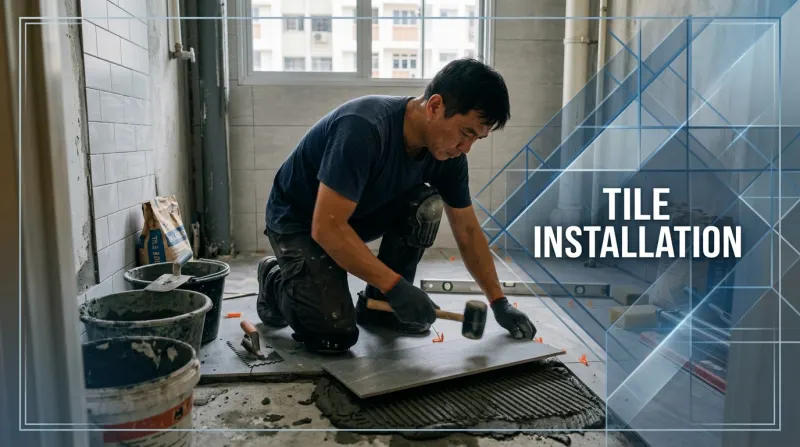
A tile that's a couple of millimeters off level doesn't look wrong on day one. Give it six months of foot traffic, and that's exactly where the cracks start, or where you get that hollow "pop" underfoot that means the tile's already lifted off the base. Excellence Renovation handles floor tiling and tile installation for HDB, BTO, condo, landed, and commercial units, and we check the base before laying anything, not after someone's complaining about a hollow spot.
What's Included in Our Tile Installation Services
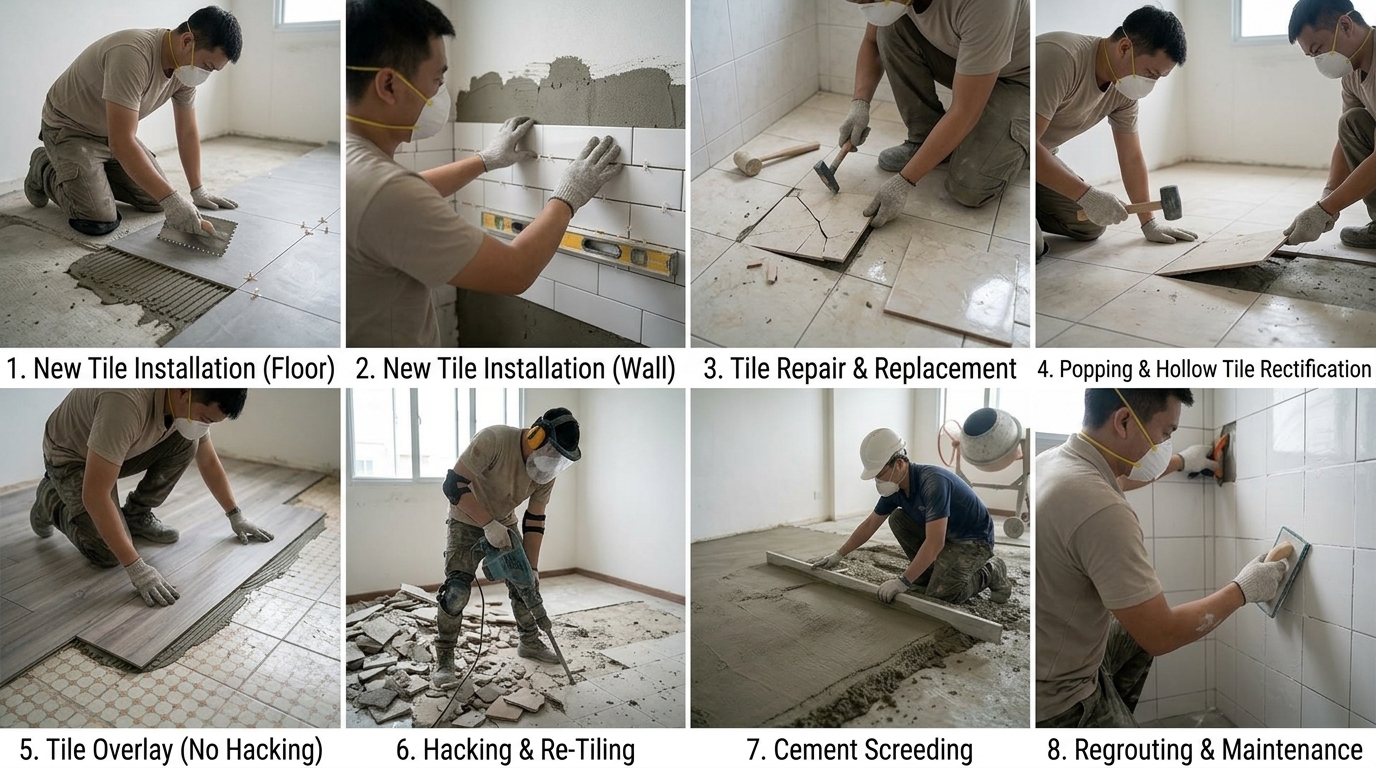
New Tile Installation (Floor & Wall) — ceramic, porcelain, homogeneous, or marble, laid on a properly prepared and leveled base for both floors and walls.
Tile Repair & Replacement — cracked, chipped, or stained tiles pulled out and replaced without disturbing the surrounding grout lines more than necessary.
Popping & Hollow Tile Rectification — that dull, hollow sound underfoot means the tile's deboned from the base beneath. We remove and relay the affected section rather than just grouting over the symptom.
Tile Overlay — laying new tiles directly over an existing floor when the base actually qualifies, skipping the hacking step entirely.
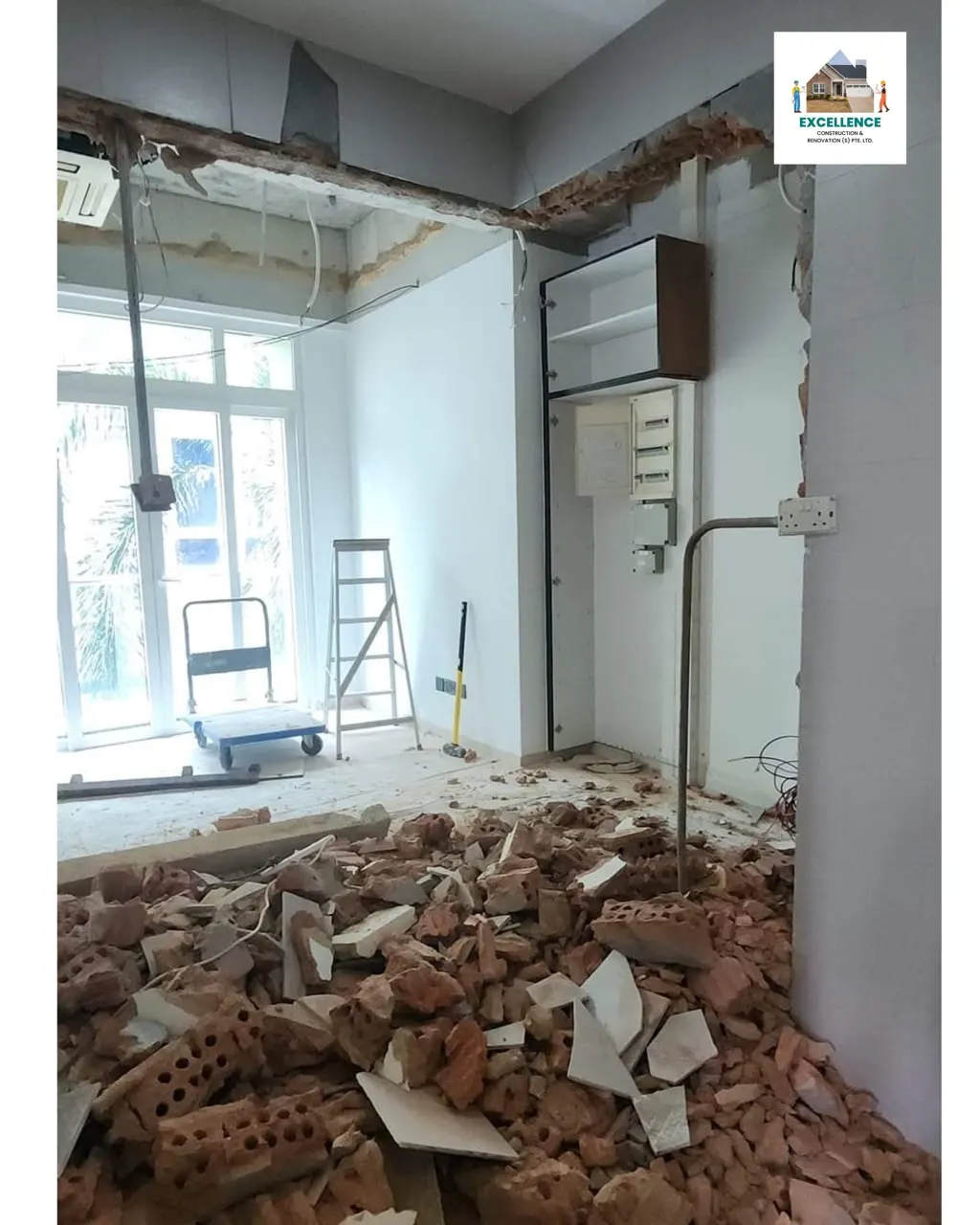
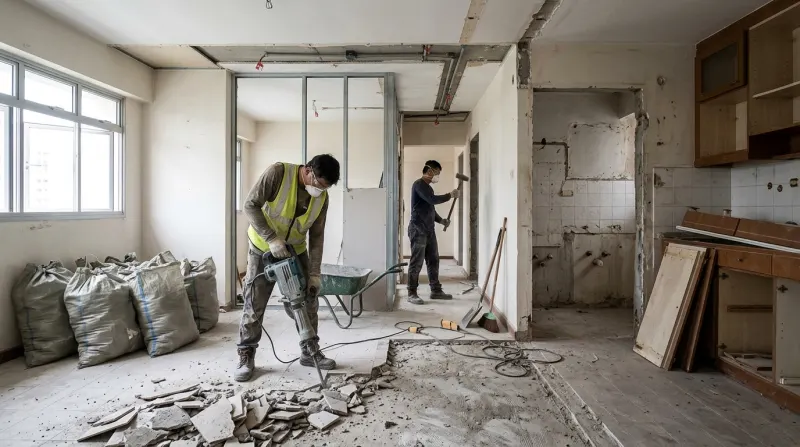
Hacking & Re-Tiling — where the existing floor doesn't qualify for overlay, old tiles come out completely and the floor's rebuilt from the base up.
Cement Screeding — leveling the base floor before tiling, so the tiles sit flat instead of following whatever dips or humps were already in the slab.
Regrouting & Maintenance — old, cracked, or discolored grout removed and replaced to stop water getting in behind the tiles.
Floor Tiling
Floor tiling deals with weight, foot traffic, and water underfoot in a way wall tiling doesn't, so the base prep and material choice both matter more here. A tile that's perfectly fine on a wall can crack within months on a floor if it wasn't rated for it, or if the base underneath wasn't screeded level first.
Slip Resistance for Floor Tiling
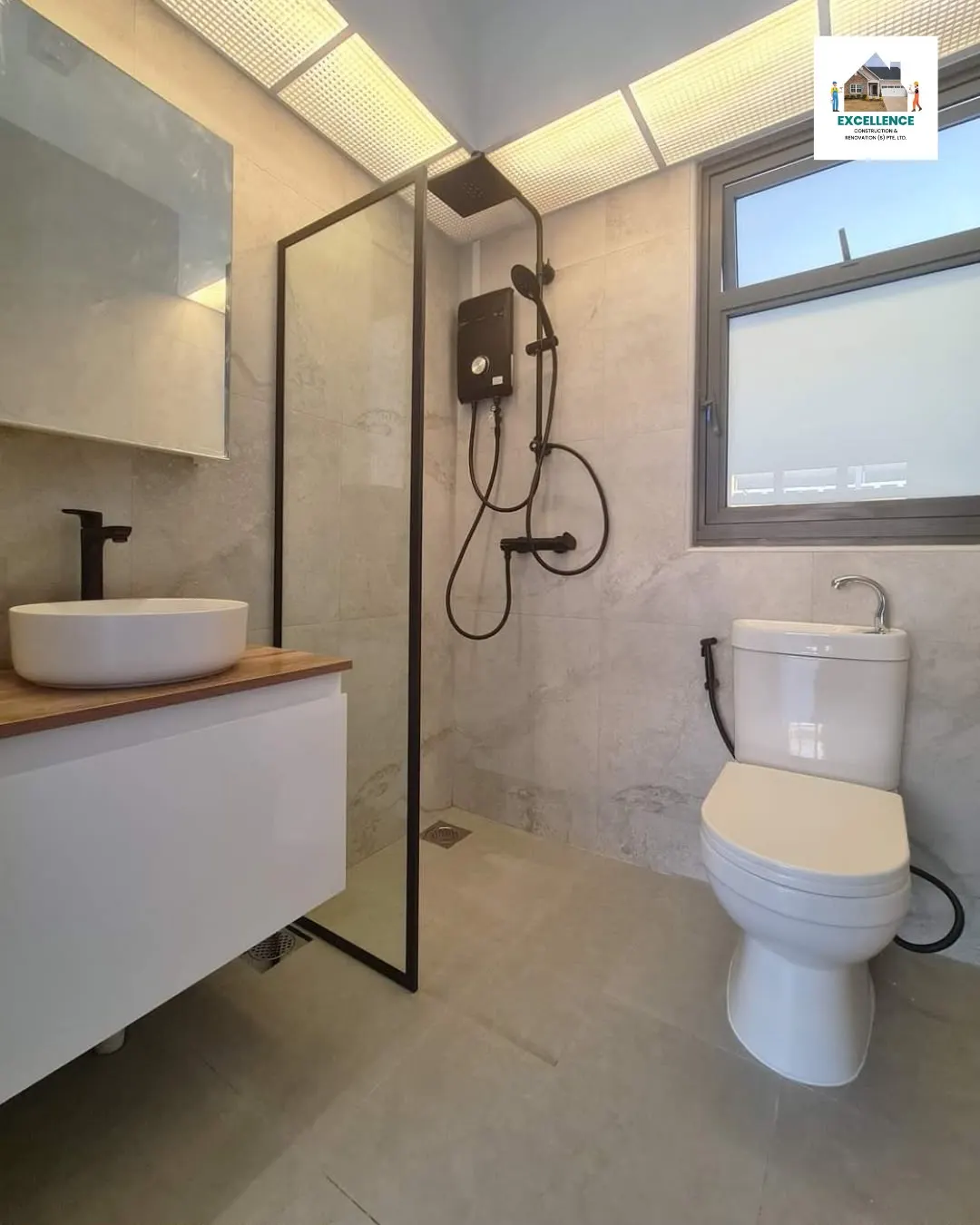
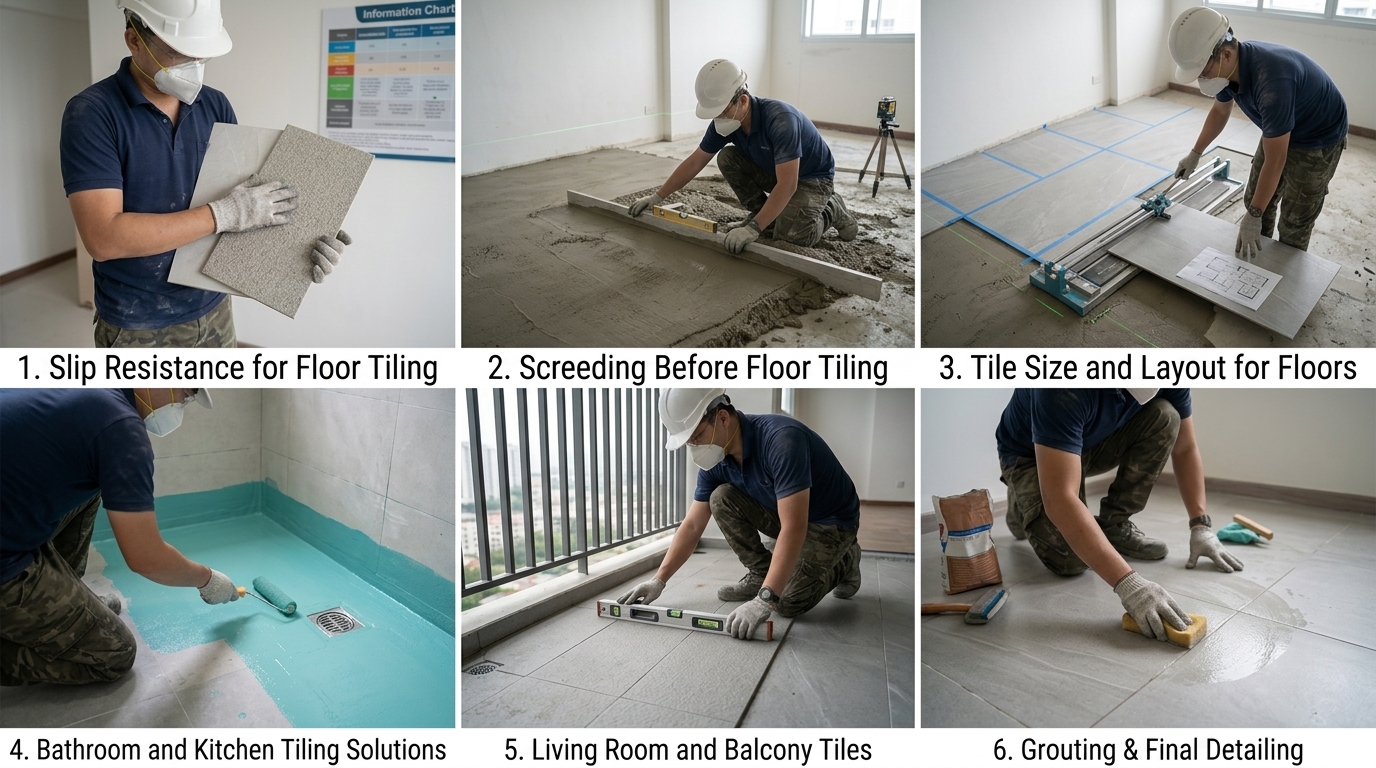
Bathrooms, kitchens, and balconies need tiles with a proper anti-slip rating, not just a rougher-looking finish. We match the tile's slip rating to the room rather than picking based on looks alone, since a slippery bathroom floor is a hazard that shows up the first time it's wet.
Screeding Before Floor Tiling
Floor tiling almost always needs a level cement screed underneath first, since floors show unevenness far more obviously than walls do — furniture wobbles, water pools in low spots, and tiles crack faster under load if they're not sitting flat.
Tile Size and Layout for Floors
Larger format tiles are popular for floors right now since they mean fewer grout lines, but they also need a flatter base to sit properly — a large tile on an uneven screed is far more likely to crack or hollow out than a smaller one.
Bathroom and Kitchen Tiling Solutions
Bathroom floors need waterproofing done properly before a single tile goes down — the membrane goes on first, gets left to cure, then gets tested for leaks before screeding and tiling even start. Skip that step or rush it, and the first sign of trouble is usually a damp patch on the ceiling of the unit below, not anywhere near the bathroom itself. Kitchens get less waterproofing attention in general, but the area around the sink and behind the hob still needs it, since spills and mopping water pool there just as much as in a bathroom. We run waterproofing up the wall to a set height in wet areas, not just across the floor, since water splashes higher than people expect.
Living Room and Balcony Tiles
Living rooms usually get the bigger-format tiles since there's more open floor to cover and fewer cuts needed around fixtures. Balconies are the opposite problem — smaller space, but exposed to rain, so the tile needs a rougher slip-rated surface and a screed that's pitched slightly toward the drain rather than dead flat. A balcony laid perfectly level just means water sits there after every downpour instead of running off.
Floor Tiling Materials We Work With
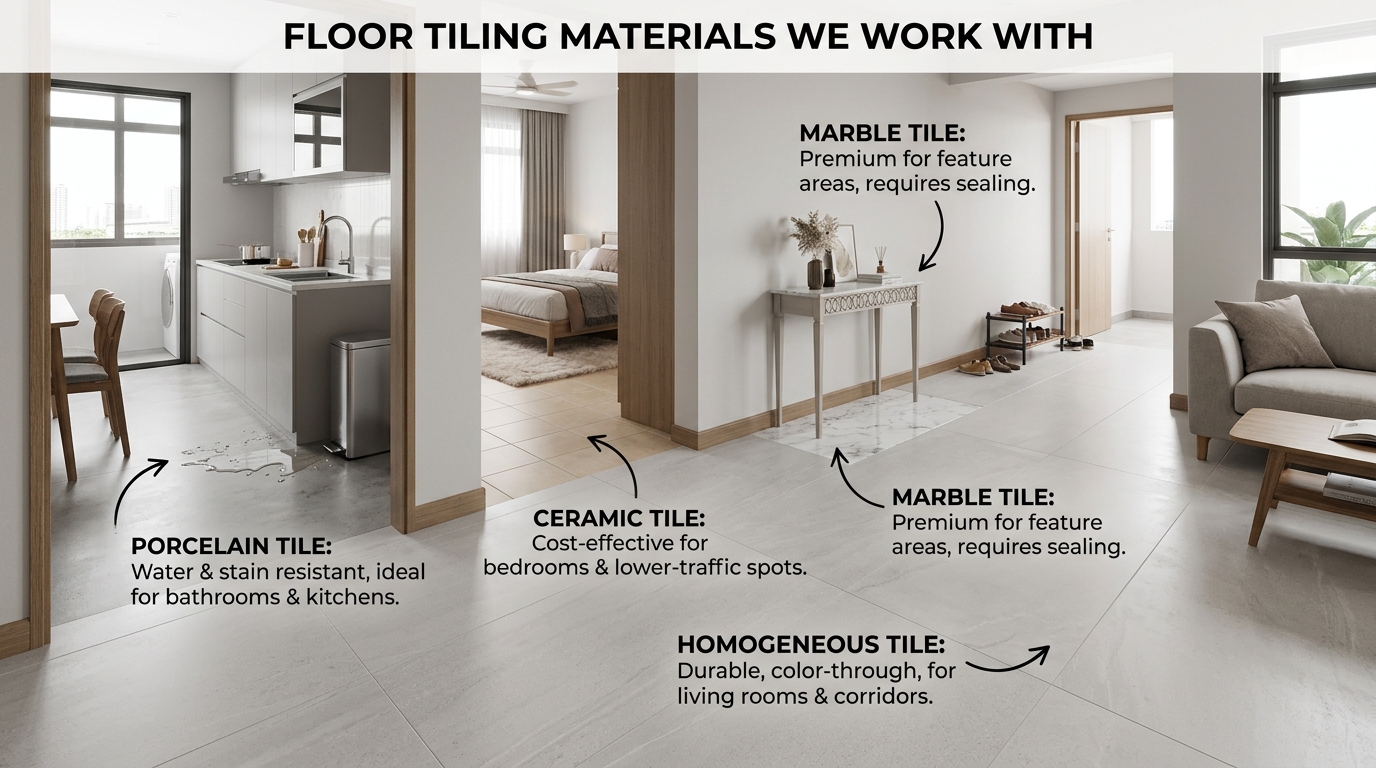
Homogeneous tile is what we lay most often for HDB living rooms and corridors — color runs through the whole tile so chips don't show white underneath, and it holds up well over years of daily foot traffic. Porcelain goes into bathrooms and kitchens more often, since it takes on almost no water and won't stain from spills sitting on it overnight. Ceramic still gets picked for bedrooms or lower-traffic spots where cost matters more than durability. Marble comes up occasionally for feature areas, though it needs sealing and a bit more care since it stains and scratches more easily than the other options.
Floor Tiling Problems We Get Called Out For
Cracked tiles near a doorway, usually from something heavy being dragged across rather than a base issue — those get replaced individually without redoing the whole floor. Tiles sitting slightly proud at one edge, so you catch a toe on it walking past, which typically means the adhesive bed wasn't even when it was laid. Discolored grout lines in a kitchen or bathroom that won't scrub clean anymore, which is more a regrouting job than a full retile. And the hollow-sounding patch we've already gone into above — floor tiling is where that shows up the most, since floors take direct impact and weight that walls just don't.
Tile Overlay vs Hacking & Re-Tiling — Which One You Actually Need
Tile Overlay | Hacking & Re-Tiling | |
|---|---|---|
When it works | Existing tiles are flat, solid, and well-bonded | Existing tiles are cracked, hollow, or uneven |
Speed | Faster — no demolition involved | Slower — full removal and rebuild |
Floor height | Raises floor level slightly | Floor level stays roughly the same |
Long-term result | Fine if the base actually qualifies | The more reliable fix for a damaged base |
Expert Tiling Services for HDB, BTO, and Condos in Singapore
Different unit types come with different tiling headaches. A resale HDB flat usually has old, uneven tiles that need hacking out before anything new goes down, and the debris disposal has to fit within the estate's lift-booking hours. A BTO unit is closer to a blank slate — bare concrete, no existing tiles to remove — but the screed still needs to meet HDB's approved-material list before tiling starts. Condo units bring their own management-council rules around work hours and protecting common corridors, and landed properties are the one category where we're not boxed in by an HDB or MCST timetable at all. Excellence Renovation tiles all four categories regularly, and the quote reflects which one you're in rather than a flat rate that ignores the difference.
Why Tiles Pop or Sound Hollow
This is one of the most common calls we get, and it almost always traces back to the same cause: insufficient adhesive coverage or trapped air pockets under the tile when it was first laid, sometimes made worse over time by the concrete slab expanding and contracting with heat. Once a tile's deboned like this, no amount of regrouting fixes it — the tile needs to come up, the base cleaned and re-bonded properly, and the tile re-laid. Leaving it just means the crack spreads to neighboring tiles eventually.
Our Tile Installation Process
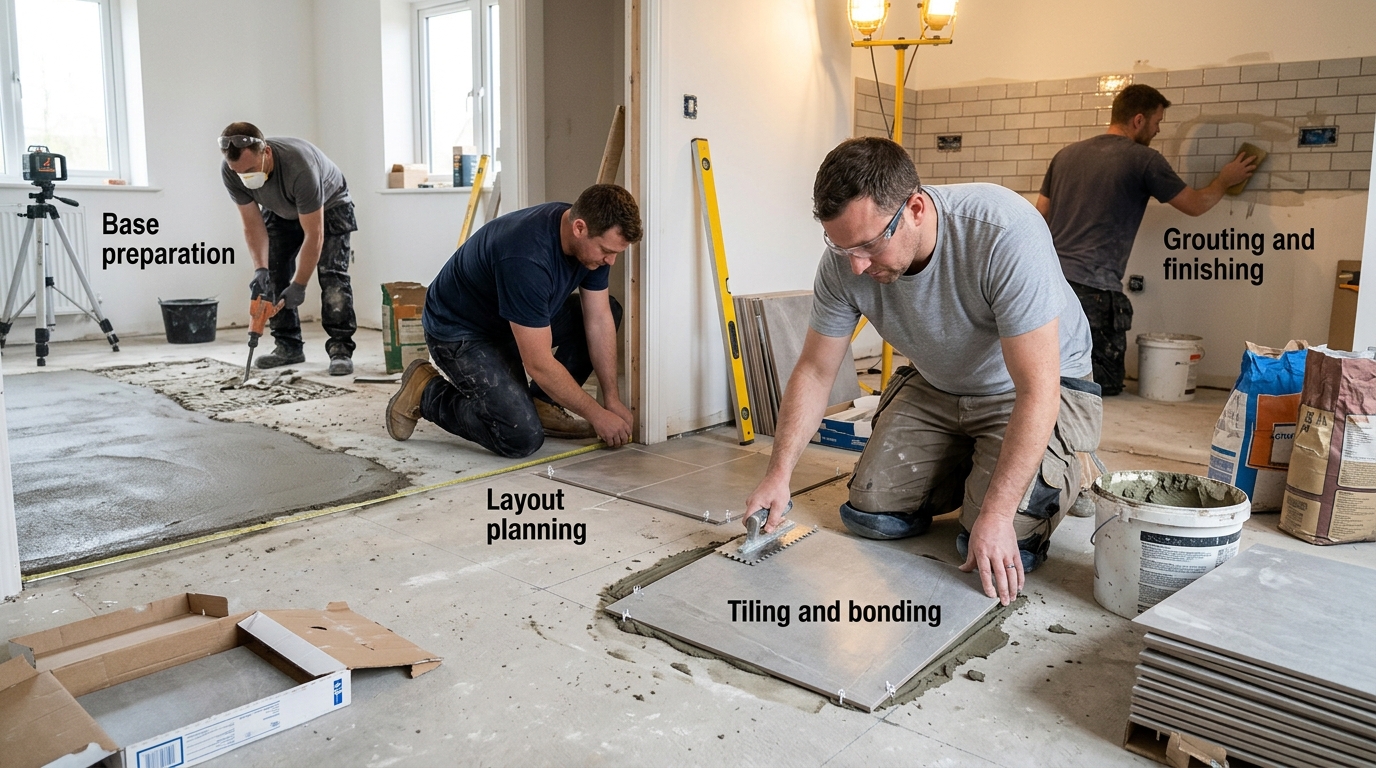
Site assessment. We check the existing floor or wall — flat and solid enough for overlay, or does it need to come out completely.
Base preparation. Cement screeding where the base needs leveling, or hacking out the old surface where a full re-tile is the right call.
Layout planning. Tile layout is planned before anything gets laid, especially around doorways, drains, and feature areas, so cuts land in sensible spots rather than as an afterthought.
Tiling and bonding. Tiles are laid with proper adhesive coverage across the full back of each tile, not just a few adhesive dabs, which is the usual cause of hollow tiles later.
Grouting and finishing. Grout applied and cleaned once the tiles have set, with expansion joints left where needed so the floor can move slightly without cracking.
Why Choose Excellence Renovation for Tile Installation?
Itemized quotes, not a lump-sum guess. You get a breakdown of screeding, hacking, tiling, and materials separately, so you can see what's driving the cost rather than taking one number on faith.
We check the base before we quote a method. Overlay only gets recommended when the existing floor actually passes the flat-and-solid test — not because it's the faster sale for us.
HDB-approved materials where required. Screed and other regulated materials used on HDB jobs come from the approved list, and we handle the permit application where the scope calls for one.
We tell you when a job doesn't need the expensive option. If regrouting fixes the problem, we say so instead of pitching a full retile.
Warranty on workmanship. If a tile debones or a grout line fails because of how the job was done, that's on us to fix — ask us directly about the coverage period for your specific job when you get a quote.
Tips for Maintaining Your New Floor Tiles
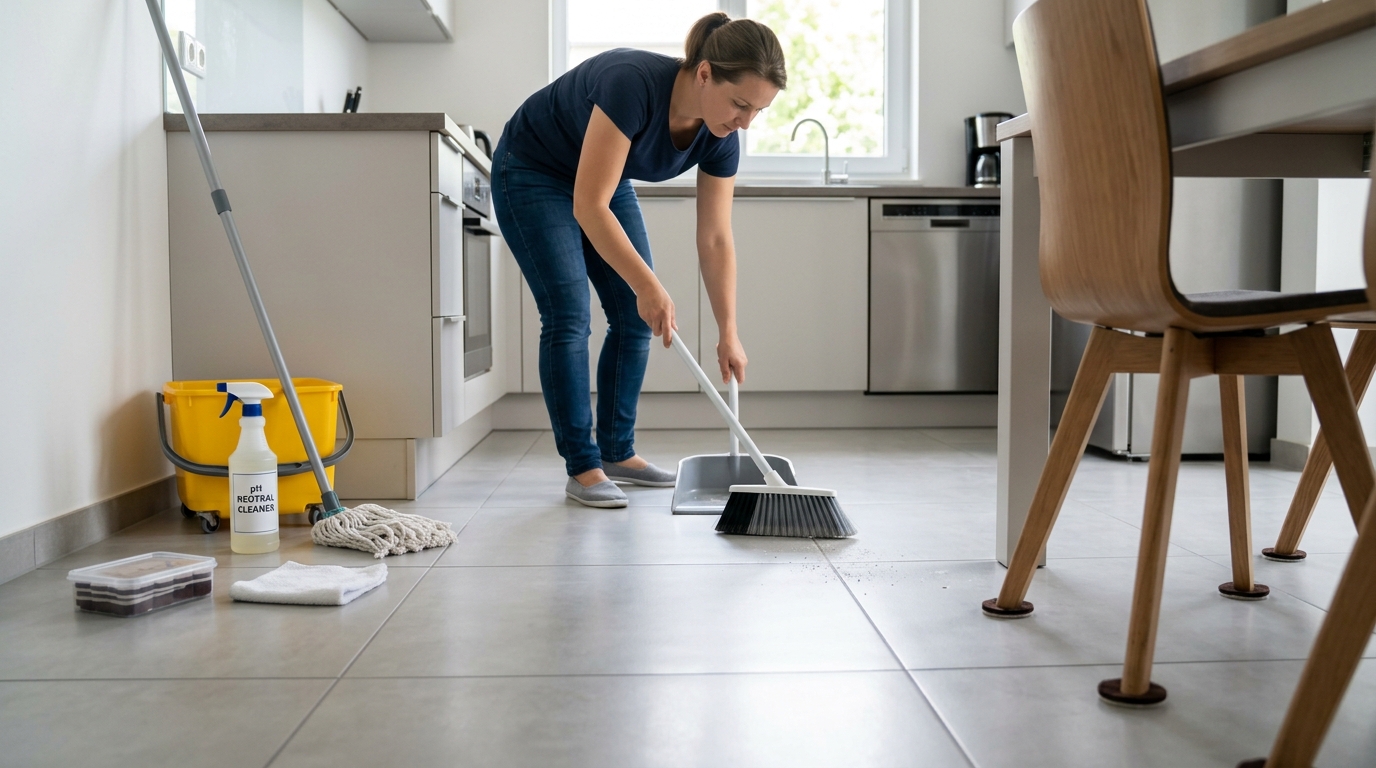
Sweep or vacuum before mopping, not after — grit dragged around under a wet mop is what dulls a glossy finish over time, not the mopping itself. Stick to a pH-neutral cleaner rather than anything acidic or bleach-based, especially on marble or homogeneous tile, since the wrong cleaner eats into the grout faster than daily foot traffic ever would. Wipe up spills in the kitchen and bathroom the same day rather than letting them sit, particularly around grout lines that haven't been resealed recently. Felt pads under furniture legs stop the slow scratching that shows up as dulled patches in high-traffic spots. And if grout starts looking patchy or a tile starts sounding hollow, it's worth getting it looked at while it's still a small fix — regrouting is a lot cheaper than the retiling job it turns into if left alone.
Frequently Asked Questions
Can I install new tiles over my existing tiles? Sometimes. If the existing tiles are flat, solid, and well-bonded, overlay is usually possible and saves both time and hacking mess. If there are any hollow-sounding or loose tiles, they need to come out first.
Why does my floor tile sound hollow when I walk on it? The tile has deboned from the base underneath, usually from insufficient adhesive when it was first laid. It needs to be removed and re-laid properly — regrouting over it doesn't fix the underlying issue.
How long does tile installation take for a standard HDB flat? A single bathroom typically takes 2 to 4 days, including screeding and grouting time. A full-unit retiling job takes longer, depending on how many rooms are involved and whether hacking is needed.
What's the difference between ceramic, porcelain, and homogeneous tiles? Ceramic is the more affordable, lighter-duty option. Porcelain is denser and more water-resistant, better for bathrooms and high-moisture areas. Homogeneous tiles have color running through the full thickness of the tile, so chips are less visible, and they tend to hold up well in high-traffic spaces.
Does regrouting really make a difference, or is it just cosmetic? It's more than cosmetic. Cracked or gapped grout lets water seep in behind the tiles, which over time causes the exact hollow, deboned tiles that are expensive to fix later. Catching it early with regrouting is a lot cheaper than a full retile.
Get Your Tile Installation & Floor Tiling Quote
New tiles, a hollow spot that needs fixing, or a full retile — send us a photo of your floor and we'll tell you what it needs and what it'll cost.
📞 Contact us today for a free tile installation quote.
Interested in this service?
WhatsApp us with your requirements for a free, no-obligation quote.
WhatsApp Us NowRelated Services
-
Reinstatement Services
View Details → -

Floor Screeding & Vinyl Flooring Services
View Details → -
Hacking & Demolition
View Details →
Why Choose Us?
- ✔️ Expert Professionals
- ✔️ Affordable Pricing
- ✔️ Timely Project Delivery
- ✔️ 100% Satisfaction Guaranteed